The Use of Wooden Packaging Crates in Maritime Transport
 endustriyelkesim.com'u Google'da tercih edilen kaynak olarak ekleyin +
Why Is a Wooden Crate Preferred in Sea Transportation?
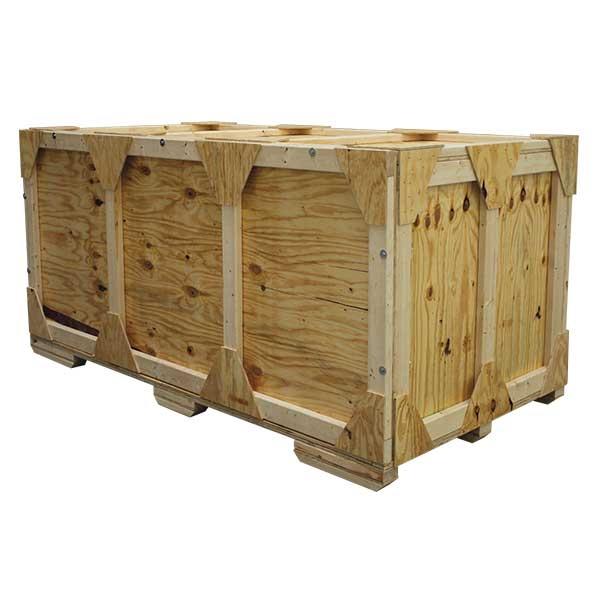
Sea Transport Packaging Chest its need arises from a much longer and unpredictable transport process than the road or airline. A container can stay at sea for an average of 2-6 weeks from the port loaded to reach the port of destination; During this time, the product is subjected to ever-changing temperatures and humidity conditions, ship wobbles and handling movements in port operations.
In sea freight wooden crate the main reasons for preference are:
● Structural strength: Wood offers much higher compressive and impact resistance than cardboard and most plastic packaging, especially for heavy and irregular geometry loads.
● Repairability: Minor damages that may occur during the sea voyage can be eliminated with simple repairs, even in the port area in the wooden chest; In cardboard or plastic packaging, this is not possible.
● Stacking capacity: Wooden crates retain their load-bearing capacity when stacked on top of each other; This ensures efficient use of container volume.
● Flexible production: Special size and inner filling design can be made according to the size, weight and sensitivity of the product.
For these reasons, especially in project loads, industrial machinery exports and heavy industrial products. sea route export chest wood has become the actual standard of the industry.
Durability Advantages of Wooden Crate in Sea Transport
The physical stress created by maritime transport can be grouped into three main headings: moisture, salt and shake. Let’s compare the effect of these three factors on the packaging material with concrete examples.
| Factor | Carton Packing | Plastic Packaging | Wooden Crate |
|---|---|---|---|
| Humidity/Humidity | It softens in a short time, loses its structural durability | Not affected by moisture, but condensation may accumulate on the inner surface | Maintains its structural integrity with the right process and priming |
| Salty Air | It is rapidly deteriorating, there is a high risk of mould | Not affected, but metal parts can be corroded | It is made resistant to the salty environment with the appropriate coating |
| Vibration/Impact | Low impact resistance, the risk of heavy load tearing | Moderate resistance, cracking of brittle species | High impact and compressive resistance maintains its shape |
| Heavy Load Bearing | Inappropriate | Limited capacity | High capacity can be increased by engineering calculation |
| Stackability | Weak, collapses under the upper load | Intermediate | Suitable for high, multi-coat stacking |
Note: Performance may vary depending on the type of wood used, the protection and loading conditions applied.
For example, a packed cardboard box packed cargo, which has been waiting for weeks in a damp container, is usually softened, lost in shape when opened at the port of destination, and in some cases moulded. under the same conditions, properly treated wooden crate it continues to maintain its structural integrity and isolate the product from external factors.
This table is wooden crate moisture resistance it concretely reveals why its performance is preferred especially in long sea voyages.
How to Protect a Wooden Crate Against a Damp and Salty Environment?
Although the natural structure of wood is sensitive to moisture and salt, this risk can be largely eliminated with the right production techniques. Sea freight packaging the main methods of protection used in solutions are:
1. Moisture Barrier Film Usage: Waterproof barrier films applied to the inner surface of the crate protect the product from direct moisture contact and prevent the in-container condensation water from reaching the product.
2. Silica gel and dehumidifier packages: Dehumidifiers placed inside the closed crate keep the relative humidity in the interior under control.
3. Protective impregnation and painting: Water repellents applied to the outer surface of the wood slow down the moisture absorption from the salty air.
4. Stainless or coated metal fasteners: The selection of nails, screws and metal angles from corrosion resistant material maintains structural integrity in long sea voyages.
5. Ventilation Details: In some types of loads, controlled ventilation gaps added to the crate design reduce moisture accumulation in the indoor environment.
When these measures are applied together, the wooden crate maintains both its structural strength and product protection performance during the weeks of sea voyage.
Advantages of In-container Stacking and Wooden Crate
One of the most critical elements of cost efficiency in maritime transport is the correct use of container volume. Wooden crate container stacking it offers significant advantages:
● Square/rectangular prism form, can be designed to fit optimally to standard container internal dimensions (20′ and 40′ containers); This minimizes gap loss.
● High compressive strength thanks to this, the crates can be safely stacked on top of each other so that more load can be carried in a single container.
● Standard Base DimensionsIt provides fast and secure loading and unloading with forklifts and pallet trucks.
● Ease of fixing: Steel tape, corner guard and fastening elements can be easily mounted on the wooden surface; This prevents load slipping in the container.
In a properly designed stacking plan, wooden crates can be securely placed from container base to ceiling, both volume is optimized and the risk of load movement during shipment is minimized. At this point, designing the outer dimensions of the crate with millimeters compatible with the inner dimensions of the container directly reduces the transportation cost by eliminating the unnecessary gaps.
Is ISPM-15 Compatibility Mandatory in Sea Transportation?
Wooden packaging material used in international shipments by sea, as in land or air transport To the ISPM-15 standard it’s natural. This standard is regulated, regardless of the mode of transport, against the risk of raw wood transporting harmful organisms; because of İSPM-15 SHIPPING fully valid from the point of view.
Points to consider in practice:
● Every wooden case loaded into the container should have an IPPC stamp on the pallet and wedge material.
● Containers containing unstamped wood material can be kept under plant health control at the destination port; This may cause the entire container to stand at the customs — not only the relevant chest, but also the other loads in the same container are affected by the delay.
● In some ports, re-inspection of the entire container when unstamped wood is detected may cause serious deviations in the shipment calendar.
Therefore, exporters planning sea route shipments, industrial wooden crate sea the ISPM-15 compatibility of the packaging material they supply for transportation must be confirmed before loading.
Selection of Chests for Transport of Heavy and Sensitive Products by Sea
Heavy Duty Cart for machinery, equipment and project load exporters that need it, crate selection requires a different engineering approach than standard packaging:
● Load distribution calculation: In heavy and unbalanced geometry products, the base and side panel thicknesses of the crate should be calculated according to the centre of gravity of the load.
● Inner Filling and Fixing Systems: In precision electronic or precision mechanical parts, the vibration damping inner filling material and the support elements that fix the product in the crate are critical.
● Forklift and crane compatible base design: In order for the crate to be lifted securely with both a forklift and a crane, the position and strength of the sole wedges should be specially planned.
● Moisture and corrosion measures: Especially in machine parts with metal parts, additional protection layers should be applied so that the accumulation of moisture that may occur during the sea travel does not cause corrosion on metal surfaces.
A chest designed with the right engineering approach both protects the product from physical damage and provides assurance to the exporter in terms of insurance and damage risk management.
Crate Solutions Suitable for Industrial Cutting Sea Transportation
Proje Endüstriyel Kesim as a result, we produce ISPM-15 compatible wooden crate solutions that are resistant to harsh conditions such as moisture, salt and shaking brought by sea route exports. With our designs optimized for container interior dimensions, we both efficiently use volume and increase stacking safety.
Our chests that we equipped with moisture barrier applications, corrosion-resistant fasteners and product-specific interior filling systems; It provides safe maritime transport in a wide range of products from machinery and equipment exports to project-based heavy industry loads.
If you do not want to take risks from packaging in your sea route, you can contact our team and get a special offer for your cargo, an ISPM-15 compatible and optimized box solution for container stacking.
Our Online Stores


Working Hours
- Monday - Friday
- 08.00 - 18.00
- Saturday - Sunday
- Closed

