XPS Foam
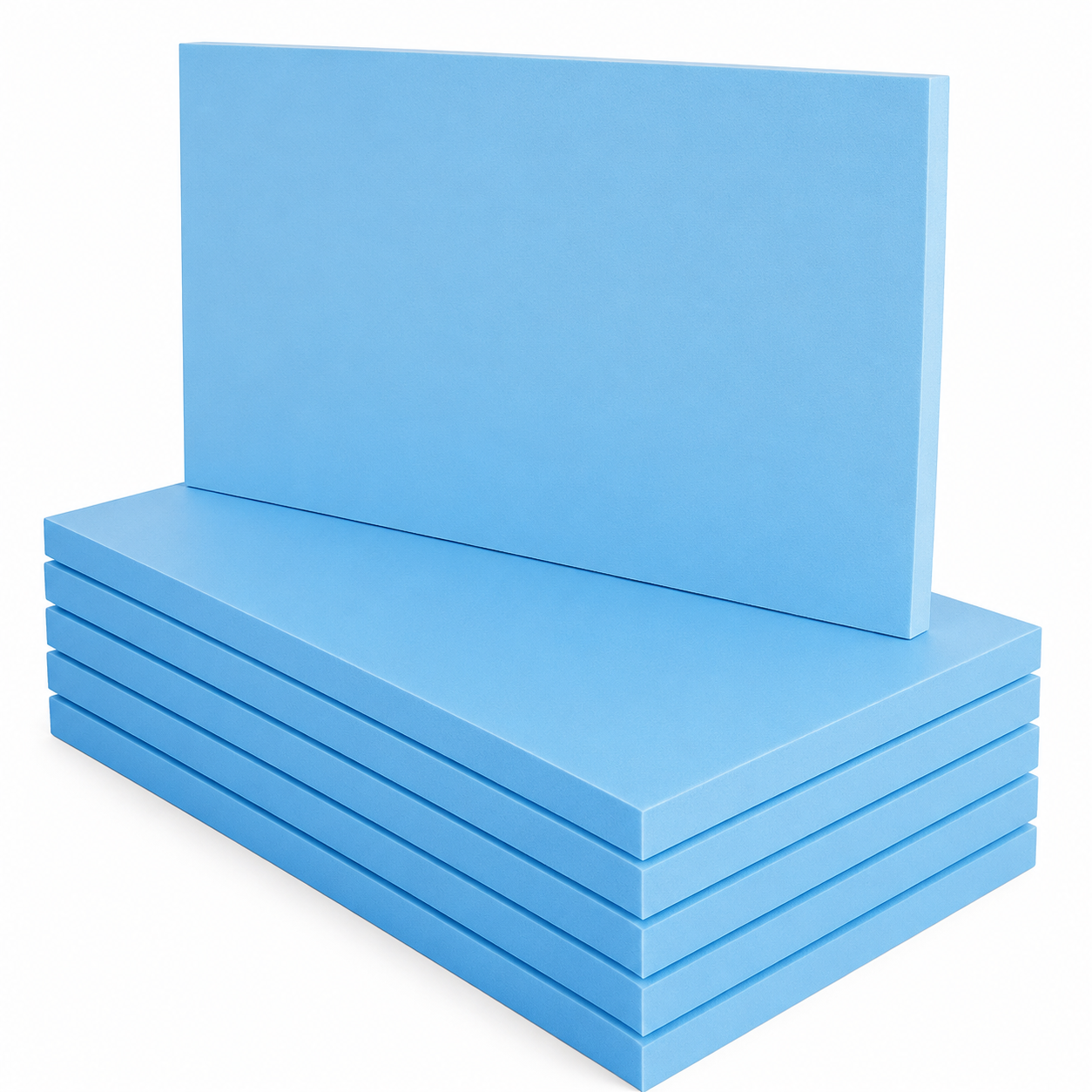
What Is XPS Foam and What Does It Do?
XPS foam is an insulating foam made of an extruded polystyrene (XPS). It is widely used in the construction and construction sector to provide thermal insulation. XPS foam performs effectively, especially in areas such as exterior insulation and roof insulation. Especially water resistant, it helps to provide long-term insulation without being affected by external factors.
This material increases energy efficiency by offering high thermal insulation value. XPS foam, which is preferred in both residential and commercial areas, can be used in a variety of applications. It reduces heat bridges, prevents cold and hot air passages, optimizes the energy consumption of buildings and contributes to the reduction of energy bills.
The lightness and durability of the XPS foam make it easy to install. Especially in floor insulation and sheathing applications, it is preferred to extend the life of buildings and increase comfort. XPS Foam can be used with a variety of thickness and density options, thus providing a suitable solution for any project.
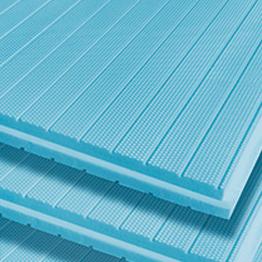
XPS Foam Features and Advantages
XPS Foam stands out in the construction industry thanks to its many superior features. Firstly, thanks to its low water absorption rate, it is not affected by moisture, which provides a long-lasting insulation. As another feature, it has high compressive strength, so it can be used even under the ground and has a high load carrying capacity. It provides energy savings by providing good thermal insulation performance.
Another advantage of extruded polystyrene foam is that it is easy to install. It can be applied quickly on construction sites, it saves workforce and time. In addition to thermal insulation, it also offers sound insulation, making living spaces more comfortable. Thanks to these features, XPS foam is preferred in a wide variety of applications in construction and insulation projects.
Besides these, XPS foam stands out as an environmentally friendly material. Recyclable materials are used in the production process and allow recycling at the end of life. While providing energy efficiency, it offers a sustainable solution in construction projects without harming the nature.
What Is XPS Foam? Difference from Eps Foam
XPS Foam (Extruded Polystyrene – Extruded Polystyrene) is produced by melting the polystyrene raw material by extrusion and shaping it in a closed cell structure. This mode of production gives the material a homogeneous cell structure and high density. EPS Foam (Expanded Polystyrene – Expanded Polystyrene) Polystyrene particles are inflated with steam and combined in moulds; Therefore, the cell structure of EPS is clear and porous.
This production difference is directly reflected in the performance values of the two materials. XPS foam offers higher compressive strength, lower water absorption rate and more stable thermal insulation, while EPS foam usually stands out as a lighter and more economical alternative.
| Feature | XPS Foam | EPS Foam |
|---|---|---|
| Compressive Strength | Between 200–700 kPa (high) | 70–200 kPa (low-middle) |
| Humidity/water Absorption Resistance | Closed cell structure, very low water absorption | Open cell structure, relatively high water absorption |
| Thermal Insulation Coefficient (λ) | 0.027–0.033 W/mK | 0.032–0.040 W/mK |
| Density | 28–45 kg/m³ | 15–30 kg/m³ |
| Utilization Environment | Damp floor, under foundation, cold storage | Wall, ceiling, light insulation |
| Price Level | Higher | More economical |
What Methods Is XPS Foam Cut?
The XPS foam cutting process is carried out by different methods according to the measurement accuracy, geometric complexity and production number of the project.
Wire Cutting (Hot Wire Cutting): A thin electrically heated wire cuts the XPS foam block by melting it. This method gives fast and efficient results in straight cuts, chamfer angles and removing plates from large volume blocks. The cutting surface is smooth and material loss is minimal.
CNC Cutting: Computer-controlled cutting systems are used in the production of complex geometric forms, curved surfaces and reproducible precision measures. It is especially preferred in prototype and mass production projects, as it offers direct production via CNC cutting, technical drawing or 3D model.
Selection of cutting method; It is evaluated on a project basis according to criteria such as part geometry, tolerance expectation and number of production.
XPS Foam Usage Areas
The use of XPS foam is quite diverse. One of the most common areas of use is exterior insulation. This foam, which is applied to the outer surface of buildings, prevents heat loss and maintains the temperature of the interior. It is highly effective in exterior sheathing projects and improves the aesthetic appearance of the structures.
Roof insulation is another important application area of XPS foam. Combined with waterproofing on the roofs, it both prevents heat loss and extends the life of the roof. This material, which is also used in floor insulation, is successfully preferred in applications to be made on the ground floors. In this way, the overall energy efficiency of buildings can be increased.
Another use of XPS foam is applications in industrial sectors. It plays an important role especially in the insulation of cooling systems. In the insulation of industrial equipment and storage areas, XPS foam helps maintain temperature balance. With all these features, XPS Foam is widely used in many industries.
XPS foam usage areas are spread over a wide range of sectors thanks to the mechanical strength and moisture resistance of the material:
● Construction Sector: It is used in under foundation thermal insulation, roof insulation, reverse roof (parachute system) applications and underfloor insulation due to its resistant to soil pressure and moisture.
● Cold Storage: It is preferred in panel filling material and wall-ceiling insulation thanks to its low thermal conductivity and low water absorption rate.
● Packaging Industry: It is used in the transportation of sensitive products in the protection parts suitable for the shock absorbing protective packaging, in-moulded carrying foams and special product geometry.
● Industrial Insulation: Pipe insulation is evaluated in equipment insulation and modeling/prototyping applications in industrial facilities.
Sensitivity and Tolerance Values in XPS Foam Cutting
In the XPS foam cutting service, the measurement accuracy varies according to the purpose of the application. While the tolerance range of ±1-2 mm may be sufficient in standard building insulation applications; Narrow tolerance values may be required for packaging moulds, prototype parts or technical applications requiring assembly.
The main factors affecting the tolerance value are:
● Cutting method (wire cutting or CNC cutting)
● Material density and block size
● Complexity of part geometry
● Post-cut assembly/seat requirements
Our company clarifies the tolerance range through the project technical drawing or sample and submits it to approval before production.
XPS Foam Technical Specifications
The technical characteristics of the XPS foam are important elements that provide energy efficiency and increase insulation performance. The density of XPS foam usually ranges from 30 – 50 kg/m³. This range of density is a factor that directly affects the durability and thermal insulation of the material. High density values result in greater compressive strength and thermal insulation.
The thermal conductivity coefficient is one of the most important features of the XPS foam. It is usually in the range of 0.025 – 0.035 W/mK. This low value offers a significant advantage in increasing energy saving while minimizing heat loss. Producing in accordance with standards such as TS EN 13164 increases its reliability.
The water absorption rate of XPS foam is also an important consideration. Thanks to its water absorption value below 0.1 percent, it lasts for a long time even in humid environments. In roof insulation and exterior applications, this feature prolongs the life of the material and increases the effectiveness of insulation. These technical features reinforce the advantages of the XPS foam in the construction industry.
Is Special Size XPS Foam Cutting Possible?
Yes, XPS foam can be produced in project-specific size and geometry outside of special cutting standard plate dimensions. A cutting plan is created in line with the measurements taken from the technical drawing, 3D model or sample part.
Topics taken into account in private sector requests:
● Number of parts and mass production requirement
● Desired density class (according to the pressure resistance requirement)
● Surface treatment need after cutting (if available)
● Delivery time and logistics planning
also called XPS styrofoam cutting, this process can be applied both in the production of singular prototypes and in repeated series orders.
Xps Foam Prices
XPS foam prices vary according to the thickness, density and application area of the material. In general, XPS sheets offer price ranges determined by thickness, density and quality material options. Although it varies according to market conditions, it is preferred as a budget-friendly insulation material for many projects with affordable price options.
At the same time, the price comparison between EPS and XPS is also very important. The high performance and energy savings provided by XPS foam increase cost effectiveness in the long run. Therefore, when we think about investment, long-term gains should be considered rather than short-term prices.
When bulk purchases are made, especially in large construction projects, additional discounts or advantages can be provided on XPS foam prices. As Proje Industrial Section, we offer quality products at affordable prices in bulk purchase processes. The affordable prices we provide provide a great advantage for our customers who prefer XPS foam.
Our Online Stores


Working Hours
- Monday - Friday
- 08.00 - 18.00
- Saturday - Sunday
- Closed

