XPS Extruded Polystyrene Cutting
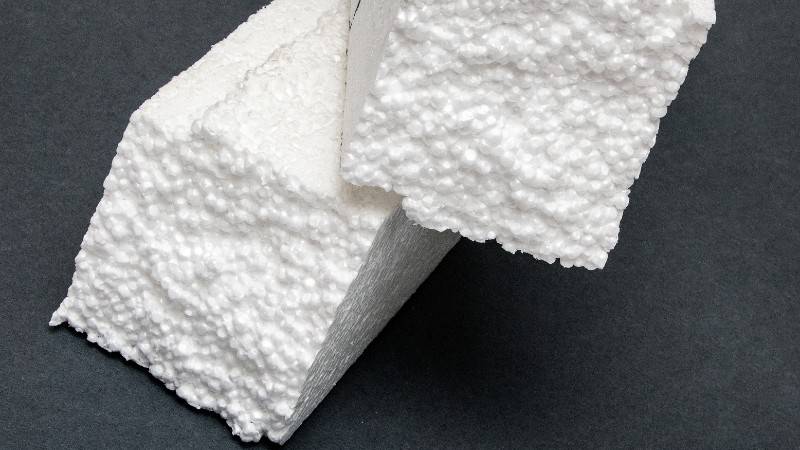
XPS Extruded Polystyrene Cutting
XPS Extruded Polystyrene used for thermal insulation purposes and it is one of the most efficient materials. They can be used as plates in different shapes, sizes, dimensions, in various surface and edge shapes, depending on the place of use and the purpose of use. Products that can be used easily between -50 to +755 are kept ready for delivery in standard sizes, and demands can be met in a short time by making fast production for special size requests. Products that are completely certified and comply with TS standards can be used in a very wide area, and they gain more and more usage areas day by day. However, there are also various disadvantages, and therefore it is predicted that there will be a change in production standards over time.
What Is XPS Extruded Polystyrene and Where Is It Used?
- XPS Extruded Polystyrene is foam materials that have a homogeneous cell structure and are produced for thermal insulation. Its raw material is polystyrene and can be easily pulled along the line with the desired thickness through the extrusion process. Since its production is carried out under continuous computer control, it has the appearance of a homogeneous honeycomb and a stable cell structure is obtained. The cells are connected to each other from all faces and the air is trapped inside the cells. With dry, still air, the best thermal insulation is provided for the time being.
- XPS Extruded Polystyrene Cut, which has a very wide usage area, successfully used on the foundations, walls and roofs of structurestired. Therefore, XPS alone can be enough to lay a structure from foundation to ceiling with thermal insulation. With its strong and high quality structure, it can exceed your expectations every time.
- In sandwich roofs, industry, facade panels, cold storages, emergency huts, truck crates, frigorical van safes, military protection units, protection units on construction sites, glassless areas of joinery systems, livestock farms, thermal insulation They are also successfully used on sandwich panel partition walls.
XPS Extruded Polystyrene Application Areas
- XPS Extruded Polystyrene stands out as a thermal insulation material in a very wide area. In this respect, first of all, it can be used on the basis of all kinds of construction. In the thermal insulation of the foundation curtain walls, under the flooring concrete in thermal insulation, it is applied in the insulation of the floors that sit on the floor.
- It stands out as a thermal insulation material on the walls of the buildings. The wall is applied in the internal thermal insulation, the outside wall thermal insulation, that is, in the sheathing, in the wall applications, in the thermal insulation of the thermal bridges.
- Roofs are among the areas where XPS Extruded Polystyrene sections are located the most. It can be applied on reverse terrace roofs, terrace roofs that cannot be visited, on terraced roofs covered with gravel, on terrace roofs that can be visited, on tiled terrace roofs, on tiled terrace roofs that fit in wedges, on garden roofs. It can also be applied in pitched roofs, on the roof board, in the thermal insulation of pitched concrete roofs and in cold warehouses.
- Showrooms can be used for thermal insulation on the floors of structures such as stores and offices, as well as providing efficient results in warehouses.
XPS Extruded Polystyrene Material Details
- XPS Extruded Polystyrene production can be done entirely on demand. Whether the surface is armored, rough or smooth may vary according to the user preference.
- It does not absorb water, is not affected by moisture, and when compared to other materials, XPS has a justified advantage.
- It is frost resistant and is a long-lasting material.
- Due to its high compression and bending strength, there is absolutely no decrease in its thickness over time.
- It can be easily used in recycling without mixing with other plastics.
- It can be easily shaped with any type of cutting tool. In this way, no fires are formed in any part of it.
- It has a closed porous structure and this reduces the water absorption rate much more than other thermal insulation materials.
Our Online Stores


Working Hours
- Monday - Friday
- 08.00 - 18.00
- Saturday - Sunday
- Closed

