How to Choose a Wooden Crate in Machinery and Equipment Transport?
 endustriyelkesim.com'u Google'da tercih edilen kaynak olarak ekleyin +
The most critical decision in the domestic or international shipment of a CNC machine, injection mould or heavy industrial equipment is the selection of the right packaging crate. a wrongly chosen chest; The impact, vibration and point loads that occur during transportation can cause serious damage to both the product and the delivery calendar of the enterprise.
In this guide, in machine transport wooden crate technical criteria to be considered when choosing; The difference between the lattice and the plywood crate; We consider the logic of capacity calculating by weight and special measurement production process in a B2B-oriented technical guideline for machine manufacturers, exporters and logistics companies.
Why Is a Wooden Crate Preferred in Machine Transportation?
Machines and equipment, unlike standard products, usually have irregular geometry, high weight and sensitive surfaces (CNC axes, hydraulic connections, electronic control panels). Therefore equipment Transport Box in the selection, solutions such as cardboard boxes or inflatable packaging are insufficient.
Machine packing box the main reasons for choosing wood as:
● High structural strength: Wood can be reinforced by engineering calculation to meet point loads and irregular weight distributions.
● Crane and forklift compatibility: Base wedges can be specially positioned according to the lifting points.
● Fixing flexibility: Bolts, clamps, palka and rail systems can be easily installed on the wooden surface.
● International Shipment Compatibility: When it comes to export, the wooden crate processed in accordance with the ISPM-15 standard ensures a smooth transition in the customs processes.
● Cost-performance balance: It offers a similar level of protection at a lower cost compared to metal case solutions.
These features have made the wood crate the actual choice of the sector, especially in project-based machinery exports and heavy industrial equipment transportation.
How Should the Features of the Crate Be in the Transportation of Heavy and Precise Equipment?
Heavy duty wooden crate the features to be considered in its design are noticeably different from the standard product packaging:
1. Base strength: The centre of gravity and support points of the machine should be calculated and the thickness and range of the floor planks should be determined.
2. Panel thickness: Side and top panels can be designed in different thicknesses according to the pressures and impacts that may occur during transportation.
3. Moisture and corrosion protection: For equipment with metal parts, moisture barrier and VCI (vapor phase anti-corrosion) applications should be added to the inner surface.
4. Removal points: The base and side support points should be planned so that safe lifting can be done with a crane hook or forklift fork.
5. Visual and written guidance signs: International shipment marks such as the center of gravity, lifting point, “this side up” must be legibly placed on the chest.
Each of these elements directly affects both transport safety and possible damage/insurance risks.
How to Calculate Crate Carrying Capacity According to Machine Weight?
| Machine Weight | Recommended Box Type | Taban Yapısı | Typical Usage Area |
|---|---|---|---|
| 0 – 500 kg | Lightweight chest | Single layer of plank | Small equipment, electronic device, spare parts |
| 500 kg – 2 tons | Medium density cage or plywood crate | Double-fold reinforced sole | Medium industrial machine |
| 2 – 5 tons | Reinforced cage crate | Thick plank + steel angle bracket | CNC countertop, injection machine |
| 5 – 10 tons | Heavy duty cage crate | Multiple beam base, crane lifting point | Heavy industrial machine, press unit |
| 10 tons and above | Project-based special engineering chest | Base and skeleton designed with special static calculation | Project load, complete production line equipment |
Note: This table is a general redirect. Actual capacity calculation; Weight distribution should be clarified by carrying distance, transport mode (land / sea / air) and engineering calculation according to handling conditions.
The design of the crate is determined not only by the external appearance, but also by the engineering calculation made according to the weight and dimensions of the machine to be transported. As a general approach, the following table summarizes the recommended chest building types according to the weight ranges:
Note: This table is a general redirect. Actual capacity calculation; The weight distribution of the machine should be clarified by engineering calculation according to the carrying distance, transport mode (land/sea/air) and handling conditions.
Cage Chest or Plywood Chest? Which Is Suitable for Machine Transport?
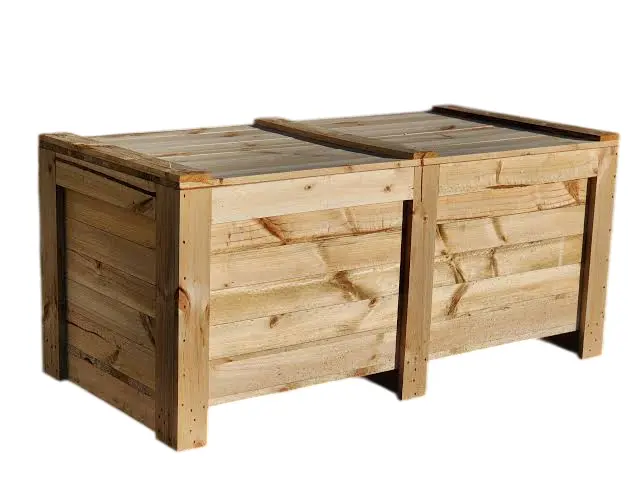
Cage Crate Machine Transport and plywood crate machine its packaging is the two most frequently compared solutions. Both are wood-based, but their intended use is different.
Cage crate:
● It is a skeletal structure consisting of laths and planks and without a closed surface.
● Ideal for heavy and large-volume machines; For example, a CNC machining centre or injection mould sits on a strong skeleton that will carry its weight in the cage crate, and the risk of moisture accumulation is reduced thanks to ventilation.
● Since the material use is less, it may be more economical compared to the plywood crate at very heavy loads.
● Since the product is visible, it offers quick visual inspection in customs and loading controls.
Plywood chest:
● The entire surface is closed and fully closed.
● Preferred for precision electronic equipment, control panels or precision measuring devices that require dust, moisture and direct contact.
● For example, an automation unit with a control panel can be directly exposed to dust and moisture when the open cage is transported by the crate; The same product is completely isolated from external factors when transported with a plywood crate.
● It is preferred in showroom shipments or high-value equipment, as it provides a more “institutional” shipment appearance visually.
In summary: Cage crate for heavy, voluminous and surface-proof machines; For equipment that needs to be sensitive, protected from dust and moisture, the plywood crate is a more convenient solution. In many project loads, two structures are used together: while critical parts are enclosed in plywood enclosure, the entire structure is transported by a cage chest frame.
Wooden Crate Fixing Methods Against Impact and Vibration
Anti-impact wooden crate the most critical element of its design is the internal fixing system. No matter how strong the outer structure of the chest is, if the product can move in the crate, the risk of damage continues.
Common fastening methods:
● Foam padding (foam): Foam blocks cut to match the contour of the product, in delicate surfaces or fragile parts, both act as a shock absorber and keep the product stable.
● Palka (wedge) system: Wooden wedges bolted to the base and side surfaces of the machine, preventing horizontal and vertical movement during transportation. It is the most common method, especially in heavy machines.
● Rail system: In wheeled or sled equipment, wooden or steel reinforced rails mounted on the base of the crate prevent the product from sliding in the crate during transport and provide controlled movement during loading/unloading.
● Stretching strap and steel tape: It is used as a complementary measure in fixing the product to the crate skeleton.
The right fixing system selection should be determined by taking into account the centre of gravity of the machine, transport distance and mode of transport (especially in long and jerky transports such as seaway). For example, only the Palka system may not be enough for an equipment containing precise measuring sensors; In such products, the multi-fixing approach, supported by foam padding, is preferred.
Special Size Chest Production: What to Do in Non-standard Machines?
Not every machine is produced in standard sizes; Therefore, most of the time custom size wooden crate production becomes inevitable. The special production process for machines with non-standard geometry usually follows these steps:
1. Measurement and technical data collection: The dimensions, weight, centre of gravity and lifting points of the machine are clarified.
2. Engineering design: The base, skeleton and panel structure that will meet the carrying load of the chest is calculated.
3. Material and process selection: The type of wood to be used, thickness and, if necessary, heat treatment is planned within the scope of ISPM-15.
4. Prototype/Production Approval: For large project-based shipments, approval is recommended through technical drawing before starting production.
5. Production and fixing system installation: The crate is produced, the internal fixing (foam, palka, rail) systems are mounted on the machine specially.
6. Quality control and shipment marking: The crate is labeled with the lifting points, the centre of gravity and the necessary international signs before loading.
This process requires a separate engineering work for each machine, unlike a standard size chest; However, as a result, a much more accurate solution emerges in terms of both transport safety and shipping efficiency.
Industrial Wooden Crate Prices at this point, it cannot be expressed with a single fixed number; The type of wood used varies according to the size of the crate, the internal fixing system and the protective processes applied. It is the healthiest approach to get bids with the technical data of the machine for accurate pricing.
Industrial Cutting Machine Transportation Crate Solutions
Industrial Cutting we offer cage and plywood crate solutions designed with special engineering calculations for weight and geometry for machinery manufacturers, exporters and logistics companies. From CNC machines to injection machinery, from heavy industry equipment to project-based production line parts, we produce internal fixing solutions supported by foam padding, palka and rail systems.
For non-standard size machines, our special size chest production process is managed end-to-end, from technical data collection to shipment marking. All our chests are produced from heat treated wood material in accordance with the ISPM-15 standard in export shipments.
Crate Solutions Suitable for Industrial Cutting Sea Transportation
If your machinery and equipment are to be shipped by sea, the crate design should be resistant not only to impact and vibration, but also to the moisture and salty environment exposed during the long journey. Industrial Cutting we also prepare the machinery transport crates we produce with moisture barrier priming, corrosion-resistant fasteners and base design optimized for container internal dimensions.
In this way, we are able to offer ISPM-15 certified packaging solutions that are compatible with different modes of transportation with a single engineering approach by adapting the cage and plywood crate solutions we have designed for the road or airline to be suitable for seafront shipments. Regardless of the transport mode of your machine, you can get a special ballot offer for your product by contacting us.
Our Online Stores


Working Hours
- Monday - Friday
- 08.00 - 18.00
- Saturday - Sunday
- Closed

