Properties and Advantages of ESD Materials
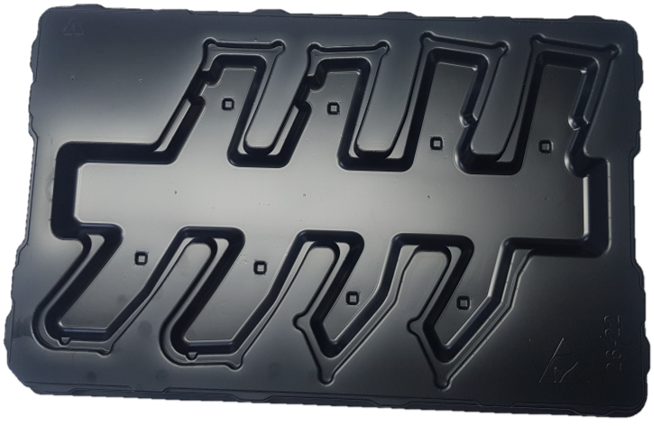
In today’s fast-growing industrial world, dealing with electrostatic discharge (ESD) problems is of great importance. ESD can cause serious damage, especially in the production and transport processes of electronic components. For this reason, the use of ESD-protected products, especially in thermoforming processes, has become widespread. “Proje Endüstriyel Kesim” enables the protection of such critical products by providing safe packaging in the sector with ESD thermoform solutions.
Properties and Advantages of ESD Materials
ESD materials are produced from special plastics that effectively distribute electrostatic charges and protect against electrical charges from the outside environment. One of the most important features of such plastics is that they have low surface resistance. In this way, the accumulation of electrostatic charges is prevented and the risk of electrical discharge is minimized.
The advantages of these materials include high durability, lightness and easy workability. With ESD thermoforming products, it is possible to safely transport electronic components by providing both protection and lightness properties together. In addition, the recycling of these materials also makes a significant environmental contribution. As “Proje Endüstriyel Kesim”, we offer innovative solutions in the industry by using quality ESD materials.
Another advantage of ESD materials is that it allows the production of thermoplastic products of different shapes and sizes. With the thermoforming process, trays, packages or privileged designs may emerge in the desired design. Thus, thanks to ESD-protected packaging, it is not only safe, but also an aesthetic appearance.
Thermoforming Process
Thermoforming is a process in which plastic materials are heated and softened and then hardened by giving the desired shape. This process is usually carried out with the help of a mould. In the first step, ESD material is heated until it becomes transparent. Then, it is drawn on the appropriate mould and a certain shape is given.
During the thermoforming process, very accurate and precise moulding can be made when the material is kept at the appropriate temperature. This increases the quality and functionality of ESD-protected products. As “Proje Endüstriyel Kesim”, we produce the best products in optimum temperature and time with our teams specialized in thermoforming technology.
Finally, after the thermoforming process is completed, the products produced are cooled and stabilized. This stage has a critical place in terms of maintaining the shape of the products and increasing the durability. In addition, ESD Thermoform products are designed to serve safely without any damage while being transported.
ESD Thermoforming Applications and Uses
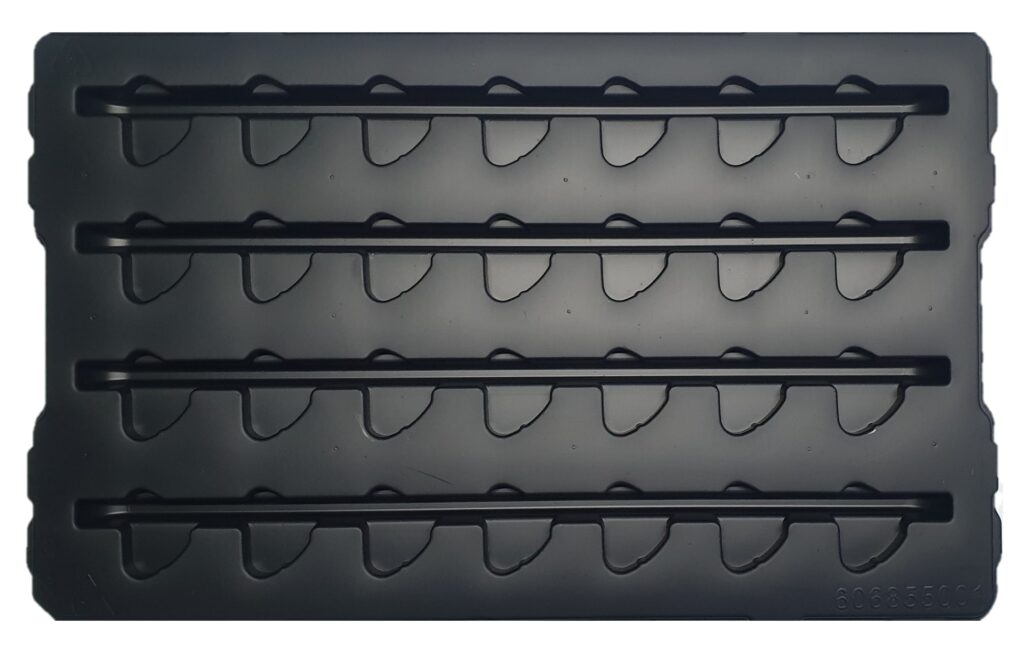
ESD Thermoforming products are quite wide. It is heavily preferred in the production, transportation and storage of electronic components. Especially PCB trays, antistatic packaging and separators are some of the most common examples in this area. In this way, any electrostatic discharge risk between electronic products is minimized.
In addition, ESD thermoforming products are available in different fields such as automotive, telecommunications and medical sectors. In these sectors, it is extremely important to provide ESD protection during the transport of breakable and sensitive parts. As “Proje Endüstriyel Kesim”, we make customer satisfaction our primary goal by offering customized ESD solution packages for every sector.
ESD Thermoform provides the flexibility of products, the opportunity to create the design and size you want. This allows companies to develop special solutions for their different needs. Especially in packaging processes, the use of ESD products reduces costs and increases performance.
Differences Between ESD and Other Plastic Materials
The most obvious difference between ESD and other plastic materials is the electrostatic charge distribution feature. Standard plastics often accumulate static electrical charges, which pose serious dangers to electronic components. ESD materials, on the other hand, effectively distribute these loads, thus helping to preserve components.
Another difference is that ESD materials usually have lower surface resistance values. This feature allows ESD products to avoid accumulation of electrostatic charges. Compared with standard plastics, the performance of ESD materials in the processing process is also higher. ESD materials, which offer flexibility and durability in production, can be shaped in accordance with different common moulds.
As “Proje Endüstriyel Kesim”, we aim to provide the most suitable solutions to our customers by considering the differences between ESD material and standard plastic materials in the products we offer. ESD-protected thermoforming products can be used safely in any sector, as they are designed using high-quality materials.
Environmental Impacts and Recycling Methods
ESD Thermoform products are specially produced to minimize environmental impacts. When these products are structured with recycled materials, they provide a great advantage against adverse effects on the environment. Thanks to recycling methods, resources can be saved by recycling materials from ESD packaging. The Proje Endüstriyel Kesim adopts environmentally friendly applications in these processes.
Recycling is also of great importance for the industry. Recycling ESD packaging both reduces costs and contributes to the sustainability of production processes. In this context, antistatic plastic trays and thermothermoon tray manufacturers play an important role in the use of sustainable materials. The project is the pioneer of this change by offering industrial, environmentally friendly products.
ESD Protection paves the way for the effective use of recyclable products. ESD thermoform designs minimize the damage caused by static electricity in the industries where they are used, while also providing profit for the environment. In this context, we strive for a healthier future by working integrated with advanced recycling methods.
Our Online Stores


Working Hours
- Monday - Friday
- 08.00 - 18.00
- Saturday - Sunday
- Closed